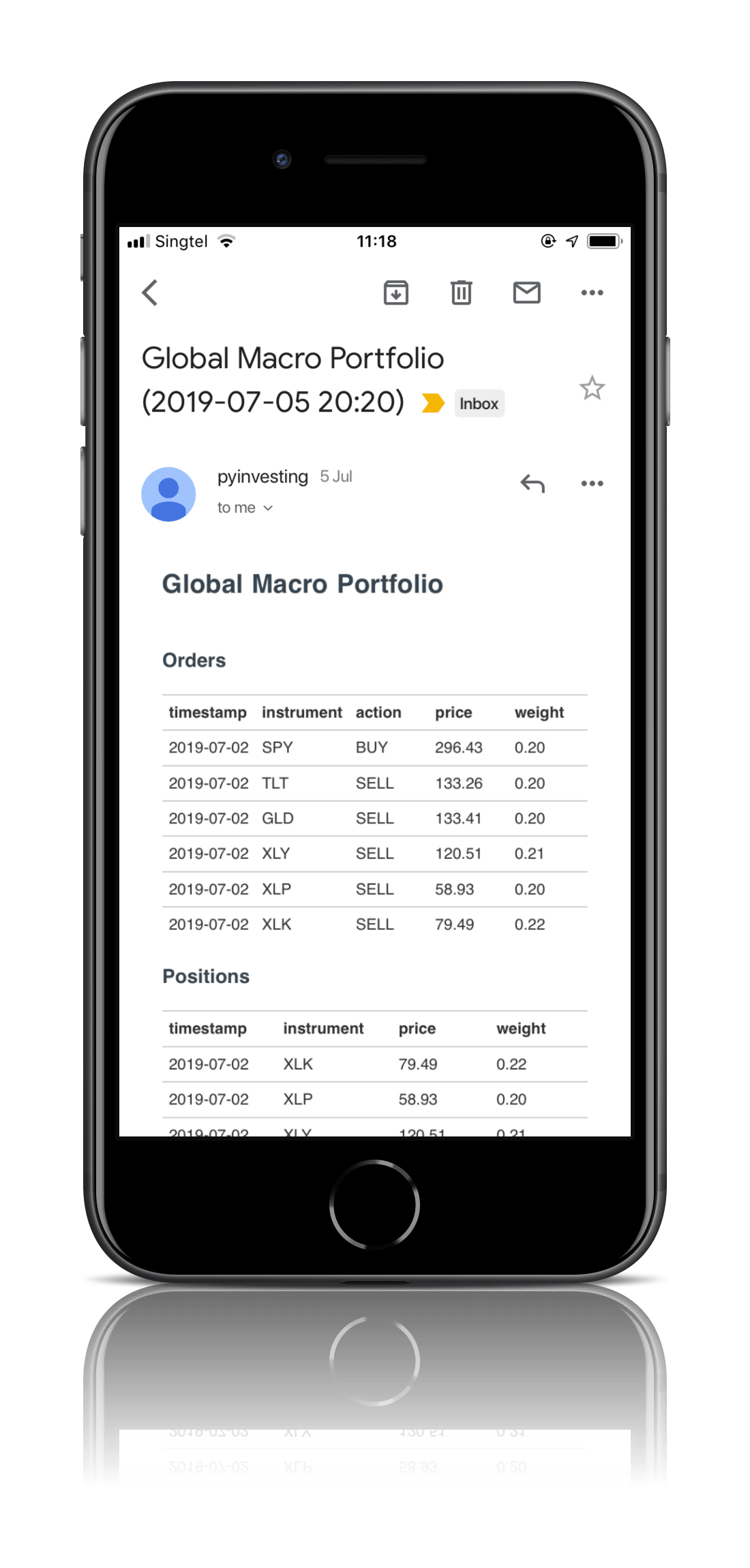
Every month, rebalance the portfolio so that 60% of the portfolio's weight is in the S&P 500 ETF (SPY) and 40% is in long term treasuries (TLT).
Simulated monitoring
- Recorded request period
- 2005-07-01 to 2026-10-23
- Currency
- USD
- Recorded status
- Completed
- Universe coverage
- Selected instruments
- Statistics scope
- Recorded NAV observations
- Costs
- Cost breakdown unavailable in this summary. Review recorded assumptions below.
Read return alongside volatility and drawdown. Review the recorded period, costs and data coverage before comparing strategies. Missing assumptions are unavailable, never assumed to be zero.
How to interpret this result
Chart window controls change the visible history. Zooming the chart does not recalculate the recorded statistics. Simulated allocations and order notifications require your review; they are not evidence of brokerage execution.
Methodology: Backtesting methodology and limitations.
Performance and strategy calculations use adjusted close, including split and dividend adjustments. Quantities are adjusted simulation units.
Statistics use the recorded NAV observations. Annualized return uses the elapsed time between the first and last recorded NAV dates, which can be narrower than the recorded request period. Chart zoom changes only the visible history.
Why does it work?
Rebalancing your portfolio to a strategic allocation of 60% stocks and 40% bonds works because it allows you to buy assets that have fallen in value and sell assets that have gone up in value on a regular basis.
For example, during a recession, as people flee from risky assets such as stocks into safe assets such as bonds, we can expect stock prices to fall and bond prices to go up. As a result, your portfolio's stock weightage will fall below 60% and your bond's weightage will increase above 40%. By rebalancing your portfolio back to a 60 - 40 mix, you are buying more stocks when they are cheap and selling bonds that are expensive during a recession. This increases the risk adjusted returns of your portfolio.
What is the performance?
The Performance and Statistics tabs show the current verified adjusted-price simulation in USD, with SPY as the S&P 500 ETF benchmark. Annualized returns, volatility, Sharpe ratio and maximum drawdown are calculated from the same published result. Use the chart dates to identify the period being compared. The Positions tab samples historical simulated allocations; its last displayed date can differ from the final performance date.