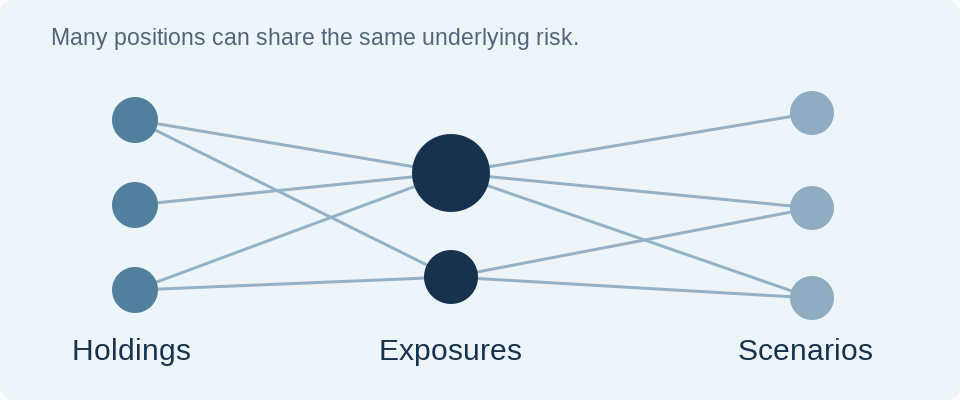
A decision paragraph and a discussion of future conditions occupy different cells in a communication comparison. September Fed and ECB passages make that mismatch visible. Before interpreting market reactions, record the action, economic assessment, future conditions and publication stage separately, including the cells the passages cannot fill.
- The Fed passage records an action and assessment; the ECB passage details risks and future conditions.
- Decision and press conference windows can contain different types of policy news.
- Economic information can accompany a policy surprise, so a rate rise alone does not identify its cause.
The functions and stages matrix starts with incomplete rows
For the Federal Reserve row, the September 16, 2026 statement supplies the action cell: a quarter percentage point target increase. Its assessment cell describes resilient spending, strong productivity, robust capital investment and elevated inflation. The objective cell links the action to price stability. The passage does not set out a detailed conditional future rate path. Its release stage is a policy statement, not a separately observed press conference window. These cells describe the passage's content, not the surprise relative to market expectations. (Federal Reserve)
For the ECB row, the September 10, 2026 monetary policy statement with questions and answers supplies an assessment of upside inflation and downside growth risks. The future conditions cell names the inflation outlook, underlying inflation and transmission, while rejecting a committed rate path. The paragraph examined here refers to the decision without stating its numerical size. The document label identifies a statement with questions and answers; this passage alone supplies no separate timestamp for each stage or numerical action comparison. (European Central Bank)
The publication window changes the comparison
ECB researchers study ECB information in separate decision and press conference windows. They associate the decision window mainly with the immediate policy setting, while the explanatory window contains information affecting different parts of the curve. Comparing a complete ECB explanation with only the Fed’s initial release would mix stages. Publication timing is part of the evidence, alongside the text and the instrument whose price response is being examined. (European Central Bank)
The stage matrix therefore needs an explicit missing entry: equivalent isolated windows for the September documents have not been established here. Comparing a full explanation with an initial decision paragraph can load guidance and implementation information into only one side. The ECB event research makes this economically consequential because those windows affect different maturities. A very short rate and a longer yield cannot be treated as interchangeable confirmation of the same message merely because both moved on the announcement date. (European Central Bank)
Federal Reserve research distinguishes a surprise in the current Fed target from news about the future policy path. Their research explains why an unchanged setting can still accompany important announcement news. Comparative reading should therefore ask whether language changes the anticipated sequence of future decisions. A firm description of the present stance and a revision to the expected path are separate inputs, even when both appear in a compact statement. (Federal Reserve)
Watch for an identifiable revision to the expected path, accompanied by an account of what had been anticipated before the release. The Fed event study makes that surprise the object of analysis. An already expected action is weak evidence of a fresh catalyst. Changed guidance could matter, but its significance still depends on the prior expectation and on the information arriving alongside it. A useful comparison records those dependencies instead of inferring surprise from the decision alone. (Federal Reserve)
An economic assessment can arrive with policy news
The ECB study of information shocks identifies a further complication: policy announcements convey an economic assessment alongside policy news. Their framework uses joint movements of interest rates and equities to distinguish the surprises. Information suggesting a stronger economy can have different effects from a pure tightening. A rise in rates following an announcement is therefore an incomplete account. The interpretation needs a hypothesis about what participants learned about both the policy stance and the economy. (European Central Bank)
An information interpretation and a tightening interpretation can imply different equity exposures even if both involve higher rates. The ECB research distinguishes them using high frequency comovement and an identification framework. A whole day pair of stock and rate changes cannot reproduce that procedure because other information may enter the interval. In the September matrix, the economic assessment cell makes mixed news plausible as a research question; it does not identify a current information shock or its magnitude. (European Central Bank)
Research on communication during unconventional policy periods finds that the structure of forward guidance matters. Guidance about economic conditions and longer horizons can affect uncertainty differently from less specific messages. Details of asset purchase implementation also matter in the study. This supports examining how informative the message is. A cautious sounding explanation can clarify conditions or implementation and become useful to market analysis without relying on especially emphatic language. (European Central Bank)
The unconventional communication evidence also changes the relevant comparison from forceful wording to resolved ambiguity. A condition or implementation detail can clarify how policy will work without making the text more emphatic. If one document provides that detail and another passage serves only to announce an action, a tone ranking has confused function with clarity. A matched comparison would identify the ambiguity each passage resolves and preserve the historical setting before attributing the same effect to a current communication. (European Central Bank)
Keep the wording, market observation and estimate separate
Longer yields introduce additional uncertainty. BIS research explains that premium estimates depend on parameters and can change with revisions. A carefully timed announcement comparison may still leave the split between expected rates and risk compensation unresolved. An observed price movement and its causal explanation are different evidence claims. A central bank communication thesis becomes more convincing when it considers how the estimate of the term premium could affect that explanation. (Bank for International Settlements)
Preserve the market observation and the model version used to interpret it. The BIS account of revisions matters whenever longer yields enter the comparison. If a later premium estimate changes an earlier explanation, both versions deserve visibility. This separates changes in market evidence from changes in analytical tools. The distinction helps make the reading accountable without pretending that a single textual comparison or a revised curve model establishes a reliable currency or bond trading rule. (Bank for International Settlements)
The ECB's conditions make its future policy framework readable, but they do not fill the missing action or event window cells. A claim about relative policy news would need the equivalent Fed conditions, each bank's anticipated action and the timing of the newly released information. If those inputs point to different horizons, the comparison should remain split by horizon. Until they are present, the selected criteria support an account of conditionality rather than a measured relative policy or exchange rate surprise. (European Central Bank)
The Fed passage likewise establishes an observed decision and assessment rather than a trend in resolve. A stronger claim would need a verified earlier assessment and evidence of what was anticipated before this release. Without them, even an unequivocal action can be an expected event. Our assessment therefore gives greater weight to the visible mismatch in function and stage than to an inferred difference in tone. The next evidential step is a matched comparison, with its uncertainty preserved, before drawing portfolio conclusions. (Federal Reserve)
Editorial assessment. The functions and stages matrix reveals the limit before the market claim is made. The selected Fed action and ECB future criteria cannot rank the banks' relative resolve because they answer different questions and do not isolate equivalent event windows. If matched passages and prior expectations become available, a stage specific comparison could support a sharper policy interpretation. Until then, the strongest conclusion concerns the structure of the information, not a current target surprise, information shock or currency opportunity. That is a consequential distinction for exposure along the yield curve because the historical research assigns different news to different maturities.
Evidence scope. The September passages are selected observations, not a complete event study or matched transcript archive. No intraday response, prior expectation or current surprise is estimated. Historical findings are bounded to their settings. This AI assisted synthesis estimates no return or meeting probability and makes no personal trading recommendation.
Sources and further reading
- Federal Reserve issues FOMC statement
- Monetary policy statement with questions and answers
- Do Actions Speak Louder Than Words? The Response of Asset Prices to Monetary Policy Actions and Statements
- Measuring euro area monetary policy
- Deconstructing monetary policy surprises: the role of information shocks
- Communication of monetary policy in unconventional times
- Term premia: models and some stylised facts