Stock and bond diversification under inflation depends on what made the portfolio lose value. A growth disappointment can hurt expected profits while encouraging easier policy. An adverse supply shock can damage output while pushing inflation higher. The same bond allocation faces a different economic job in those settings, even before its own implementation costs and risk exposures enter the analysis.
- Map the earnings channel and the discount rate channel separately.
- A growth hedge need not defend against an inflationary supply shock.
- Evaluate alternative diversifiers by the mechanism they require and the cost of obtaining it.
Two losses that need different protection
Start with a conditional growth disappointment in an environment of low and stable inflation. Weaker expected profits weigh on equities. If policy can respond with easing, lower discount rates can support bonds. BIS research describes this opposing response as a mechanism behind negative stock and bond correlation. The assumptions do the work: the growth news must weaken earnings, and inflation must permit the policy response. The scenario assigns no return or probability to either holding. (BIS Research)
Now substitute an adverse supply disturbance. Output weakens while expected inflation rises. The ECB's analysis explains how lower expected dividends can hurt equities while fixed nominal coupons become less attractive in inflation terms. Both assets can then lose through different channels activated by the same shock. This is the qualitative shock map: growth weakness with easing capacity offers an offset, whereas weaker output combined with inflation pressure can remove it. There is no universal bond verdict in that contrast. (ECB Research)
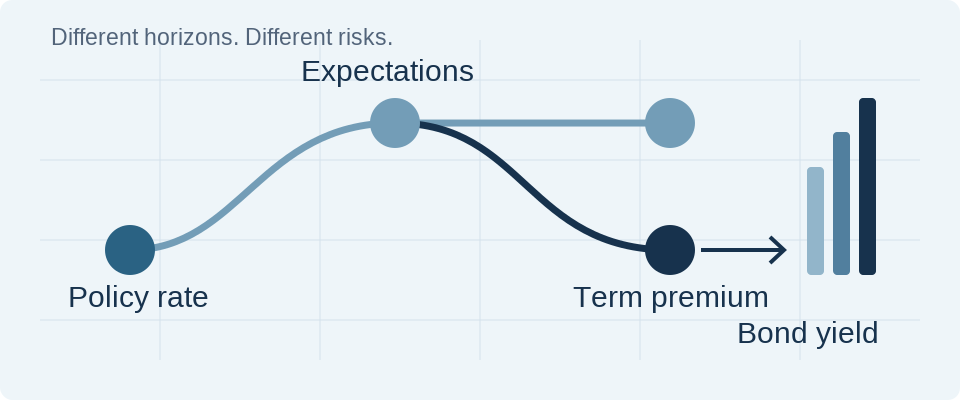
The IMF's February 18, 2026 assessment reports that stocks and bonds have more often sold off together during stress since 2020 across the markets it considers. It associates weaker bond protection with inflation and supply shocks, and also discusses repricing of term premiums. That dated observation gives the conditional comparison practical relevance. It does not establish that every subsequent equity decline must coincide with a bond loss, nor that the recent pattern is permanent. (IMF Research)
Read the map through the policy constraint
The strongest objection to the simple growth hedge is that inflation can constrain easing just when activity deteriorates. In the BIS account, positive inflation surprises reduce the scope for rate cuts and can raise expected policy rates. The equity holding then faces weaker earnings and a less accommodating discount rate. A bond hedge thesis should therefore state why inflation permits the expected response. Merely forecasting slower growth leaves the condition that supports the hedge unresolved. (BIS Research)
For a supply shock, the key research question is whether its effect on output and prices remains the dominant market concern. If those effects occur together, the ECB mechanism supports common losses. If later evidence changes the inflation outlook, the same map needs revising. Historical covariance can describe what happened over a sample without identifying which disturbance dominates next. The ECB cautions that allocation and risk models calibrated on past distributions can misrepresent more volatile conditions. (ECB Research)
A bond selloff can also raise expected future returns while hurting the holding now. The IMF discussion explicitly connects higher expected returns with current price declines and greater volatility as premiums reprice. That distinction matters to the protection question: a more attractive prospective yield does not retroactively cushion the contemporaneous equity loss. A claim about longer horizon compensation and a claim about meeting a present defensive objective should therefore be evaluated at their respective horizons. (IMF Research)
Fiscal concerns add a separate common dependency
BIS research published on June 28, 2026 examines fiscal risk shocks and finds, on average, higher borrowing costs, currency depreciation and lower equity valuations. It also reports higher goods and services prices, with the effects depending on monetary policy and fiscal fragility. Its identification uses a shift away from government bonds toward the safest corporate bonds. This is a distinct mechanism from an ordinary growth disappointment, with a different implication for which bond exposure is supposed to provide protection. (BIS Research)
If a portfolio's loss is attributed to that fiscal mechanism, government and corporate debt cannot be treated as interchangeable defensive holdings. The BIS study's investor shift is central to its identification. An analyst would need evidence that the proposed holding sits on the receiving side of that shift rather than merely sharing the word bond. The conditional judgment is that protection deserves less confidence when the supposedly defensive exposure is itself the object of the concern. (BIS Research)
AQR's study of equity drawdowns distinguishes investments that diversify ordinary portfolio variation from those expected to perform well in bad times. It reports a tradeoff between stronger hedging characteristics and average performance. That distinction prevents a low average correlation from silently becoming a promise of crisis protection. A holding can make the overall return pattern less concentrated yet fail the specific defensive task the investor has assigned to it during a particular economic disturbance. (AQR Research)
An alternative must earn its place in the same map
AQR's September 2026 discussion identifies commodities and trend following as potential inflation diversifiers, drawing on their historical performance during inflationary episodes. It also stresses that portfolio construction and implementation affect both diversification and prospective returns. Trend following can use long and short positions across macroeconomic assets, so its mechanism differs from simply holding a nominal bond. These are attributed research findings, not evidence that a particular fund will protect a particular portfolio in the next disturbance. (AQR Research)
Within this map, an alternative earns analytical relevance by addressing the channel that defeats the bond hedge. A strategy intended to respond to inflationary market trends should be examined for whether its design can capture those trends and what its implementation requires. The AQR account makes design part of the claimed benefit. Historical success in an inflation shock is a reason to investigate that mechanism, rather than a sufficient basis for assuming every implementation supplies the same protection. (AQR Research)
The final comparison should hold the defensive objective constant. If the purpose is cushioning a specified equity drawdown, compare the candidate's expected behaviour in that disturbance and the average performance tradeoff identified by AQR. If the purpose is broader diversification, acknowledge that it asks less about a single bad episode. This keeps the portfolio decision coherent without prescribing a fund or weight. Protection is a conditional service with an economic cost, not a permanent property inferred from a label. (AQR Research)
Editorial assessment. The shock map compares the same proposed protection across growth disappointment, adverse supply pressure and fiscal concern. Each case identifies the earnings effect, the policy constraint and the holding that bears the repricing. The assessment favours a nominal bond growth hedge when easing remains feasible, while demanding a different mechanism when inflation or sovereign financing concerns cause the common loss.
Evidence scope. These are conditional channels rather than scenario returns, allocation advice or estimated probabilities. The dated institutional and manager findings do not establish a current correlation or the future performance of any implementation. No alternative strategy's costs or portfolio weights are calculated.
Sources and further reading
- The correlation of equity and bond returns
- Cross-asset correlations in a more inflationary environment and challenges for diversification strategies
- Stock-Bond Diversification Offers Less Protection From Market Selloffs
- Inflation Redux?
- It Was the Worst of Times: Diversification During a Century of Drawdowns
- Financial and real effects of fiscal risk