The September 29, 2026 gilt auction attracted bids well beyond the amount offered and accepted an average price below par. Those observations can coexist. Interpreting gilt auction results starts by separating the contract, the price paid and the volume of demand, then asking what additional evidence could explain that price.
- The auction's coupon, accepted price, yield and coverage describe different objects.
- Bid volume does not establish the price buyers would accept under different conditions.
- An explanation of the result needs evidence about exposure, buyers or financing beyond the auction record.
The September sale establishes a price
On September 29, 2026, the DMO allotted £4,250 million of the 4⅞% Treasury Gilt 2036. The rounded average accepted price was £96.154 and its associated yield was 5.383%; coverage was 3.34 times. The accepted price was below par while bids exceeded the amount offered. This is a concrete sale record, rather than an explanation of bidders' motives. The same result can show substantial bid volume and a yield above the bond's coupon. (UK Debt Management Office)
The DMO glossary describes conventional gilt auctions as allocating successful competitive bids at the prices bidders offered. It defines coverage as bids relative to the amount offered. These are separate observations: accepted prices show what successful bidders paid, while coverage summarises the volume of bids. A headline about a well covered operation therefore leaves the pricing question incomplete. The auction can attract bids while still clearing at prices that imply a particular financing cost. (UK Debt Management Office)
The fixed coupon and the market yield answer different questions. The DMO glossary fixes conventional gilt payments in nominal terms; its gilt guide relates the price of a bond to the yield offered by its coupon. Together they explain why unchanged contractual payments can be bought on different yield terms. The auction's price is therefore essential to interpreting its yield. Reading only the coupon would leave the transaction's valuation unresolved. (UK Debt Management Office; UK Debt Management Office)
What exposure did private buyers absorb?
BIS research distinguishes nominal debt supply from the duration available to private investors. The maturity mix and official holdings influence the exposure that private buyers absorb. An auction interpretation should consequently identify the maturity risk being placed into the market. A financing amount alone cannot establish that exposure. The mechanism is relevant to why an operation involving longer bonds might matter differently from an operation raising a similar amount through shorter debt. (Bank for International Settlements)
The BIS government debt demand paper studies how investor sectors absorb debt as yields change. It makes buyer composition and sensitivity to price relevant to the adjustment. This complements the duration supply argument: a financing operation’s economic effect depends on the demand available to absorb the exposure. The paper does not provide a coefficient that can be applied mechanically to a current gilt auction. Its contribution is to identify the buyer side of the mechanism. (Bank for International Settlements)
Price and yield also clarify why a high coupon and a high auction yield should not be treated as equivalent. The DMO guide explains that a lower coupon bond of similar maturity needs a lower price to offer the same yield. The investor’s valuation starts with the cash flows and the price. A comparison based only on the coupon overlooks part of the return mechanism and can confuse a security’s contract with the financing conditions at its sale. (UK Debt Management Office)
The strongest alternative is a financing constraint
Bank of England research on the 2022 gilt disruption examines transactions in bonds, repo and interest rate swaps. It links deteriorating financing positions to sales and weakening market liquidity; institutions with larger earlier repo and swap exposure sold more gilts. That is evidence for a balance sheet mechanism in a stressed historical episode. It makes financing constraints a serious competing explanation to investigate when auction pricing appears unusual, while leaving their relevance to the September operation unestablished. (Bank of England)
Funding exposure deserves scrutiny when explaining unusual pricing. The gilt crisis evidence shows how deteriorating repo and derivative positions can create pressure to sell. For auction analysis, that suggests investigating whether the broader market is supplying liquidity normally or whether balance sheet constraints are affecting participation. The research motivates this question without establishing current stress. A price concession becomes more interpretable when the surrounding liquidity and financing conditions are documented rather than inferred from the auction headline. (Bank of England)
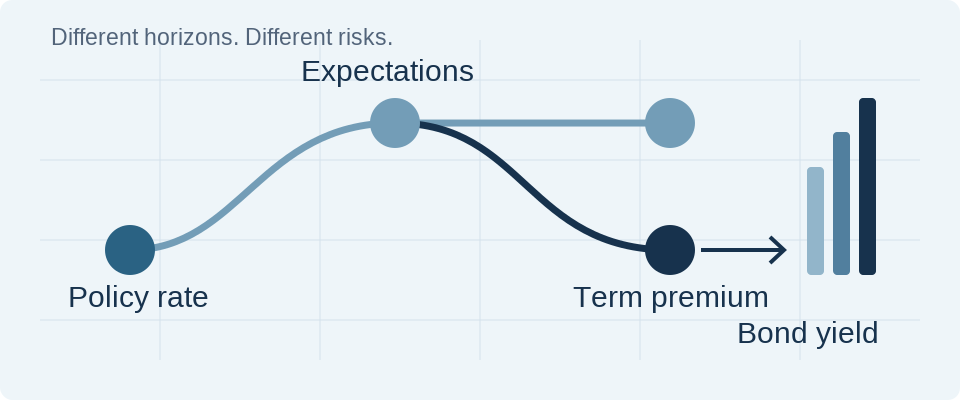
BIS research warns that estimated term premia depend on model parameters and revisions. A claim that an auction yield proves a changed risk premium therefore needs a decomposition and its assumptions. Even then, the estimated premium does not directly identify a specific fiscal or liquidity cause. The result can be informative while remaining conditional. A useful auction account separates the observed accepted prices from the mechanisms proposed to explain them. (Bank for International Settlements)
Evidence that could turn a sale record into an explanation
The supply framework suggests examining what the auction adds to duration available in the private market. That exposure depends on the bond’s remaining cash flows and the surrounding official holdings, not only the financing amount. An argument about pressure on longer yields should identify why buyers require different compensation to absorb the added risk. This creates a concrete link between the financing operation and the market thesis while leaving the magnitude to be established with current evidence. (Bank for International Settlements)
Buyer evidence would make the demand explanation more discriminating. If a claim rests on a particular sector absorbing extra duration, participation and holding information should show that adjustment. If a different buyer mix supplied the demand, the economic account would need to change even though the coverage ratio remained the same. The BIS debt demand framework motivates that comparison. It does not identify the marginal bidder in this operation or provide a transferable estimate of its sensitivity to yield. (Bank for International Settlements)
A model comparison would test the premium explanation separately. If different defensible specifications assign the yield movement differently, a claim about fiscal compensation deserves less weight. If the account survives those choices, it still needs evidence connecting the estimated component to its proposed cause. The BIS revision caveats support preserving both the original estimate and later versions. An auction interpretation should be revisable without rewriting the accepted prices that the DMO actually recorded. (Bank for International Settlements)
Editorial assessment. The useful conclusion is narrower than a verdict on confidence: buyers submitted substantial bids at the prices recorded, and the government sold the specified exposure on those terms. Under an orderly market assumption, an account of duration absorption deserves investigation before a claim of forced selling. Evidence of impaired financing would change that ordering. This assessment keeps the observed operation intact while making the preferred causal explanation conditional on facts that could overturn it.
Evidence scope. The DMO release establishes one dated operation. No contemporaneous buyer breakdown, secondary market comparison or funding dataset is analysed. Historical BIS and Bank of England research supplies competing mechanisms, without identifying their contribution to this auction. The article does not estimate a fiscal premium, an auction concession or prospective bond returns.
Sources and further reading
- UK Debt Management Office glossary: auction, duration and price
- About Gilts
- Government bond yields and the dynamics of duration supply
- The demand for government debt
- An anatomy of the 2022 gilt market crisis
- Term premia: models and some stylised facts
- Result of the sale by auction of £4,250 million of 4⅞% Treasury Gilt 2036