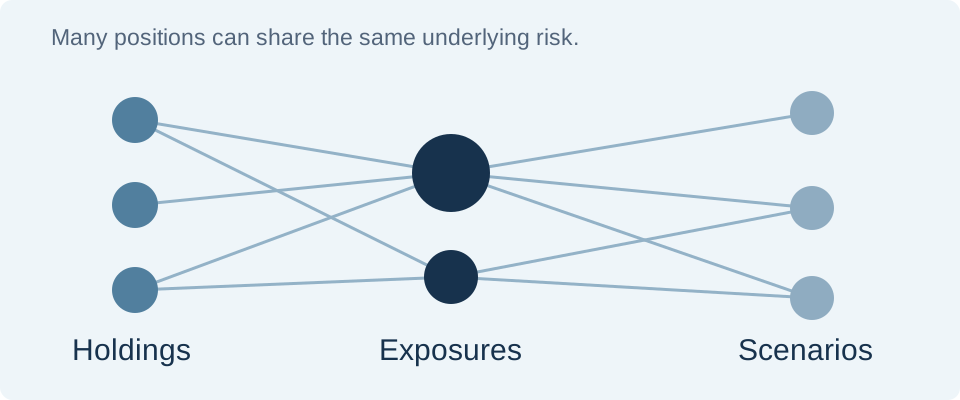
A view about a commodity's physical price does not specify the investment that will express it. A futures fund holds contracts with delivery dates, follows a replacement policy and may earn returns on collateral. When its result differs from a spot headline, contango may matter, but the gap first needs to be located in that chain.
- Contango compares prices for different delivery dates; it does not by itself determine the subsequent return of the held contract.
- Replacing a cheaper expiring contract with a dearer later contract is not automatically an immediate loss equal to their price gap.
- A rolled futures return already contains its portfolio mechanics; collateral must also be counted under the correct return convention.
- Moving to another maturity can change spot sensitivity, so a carry improvement is not necessarily a better match to the original objective.
The physical reference and the investment are different objects
CFA Institute defines a physical spot price by the commodity and delivery location, while a futures price concerns a specified quantity, often quality, and a later delivery date. Its index discussion also identifies differences in commodity selection, weights and contract replacement rules. The word commodity therefore leaves material details unresolved. A physical reference and a futures portfolio need their own specifications before their returns can support a meaningful comparison over the same observation period. [8]
USCF's USO disclosure illustrates how specific that specification becomes. Its objective concerns daily percentage NAV changes measured through a designated oil futures contract, with collateral interest and expenses included as stated. It separately warns about share prices diverging from NAV, NAV diverging from the futures benchmark, and that benchmark diverging from cash oil. Those are different correlation links. None of them is a promise to reproduce every physical oil price move over an arbitrary holding period. [5]
A curve snapshot does not fix the holding period outcome
CME Group describes contango as futures priced above spot and backwardation as the reverse relationship. It identifies storage, financing and insurance as possible contributors to contango in physically delivered contracts. It also explains that futures prices change as market views change, allowing the curve itself to change shape. The description concerns prices across delivery dates at a point in time, alongside mechanisms that can influence them; it does not freeze those prices for the investor. [1]
Campbell & Company's historical white paper addresses a frequent accounting mistake: the price gap between the contract sold and its replacement is not an immediate profit or loss from that exchange. They are different instruments. Its analysis locates the roll contribution in convergence while contracts are held and explicitly sets transaction costs aside. The implication is narrower than saying replacement is free: genuine execution costs remain distinct from mechanically treating the entire contract price gap as a loss. [2]
Suppose the held futures contract appreciates while the curve remains upward sloping. CME's account of changing contract prices permits that combination; the slope alone cannot rule it out. Campbell distinguishes the instantly observable term structure from the return inferred after the path has occurred. A contango based headwind assessment consequently needs assumptions about subsequent prices and persistence. An upward slope alone supplies neither a complete loss forecast nor evidence that the fund is tracking badly. [1] [2]
Return components belong to a specified convention
Bloomberg's methodology describes price changes in index contracts using a spot return label, while stating that investors cannot obtain the spot and roll components separately. Its BCOMSP series estimates a commodity price trend without roll effects or physical holding costs, but cannot be replicated in the underlying futures markets. The same methodology explains that contango can hurt index returns even as spot prices rise. These definitions distinguish an analytical reference series from an attainable futures investment. [3]
S&P Dow Jones Indices defines the GSCI excess return series through daily returns on its weighted futures portfolio, including the contract weights during replacement periods. Its total return series also includes interest on funds hypothetically committed to the investment. It publishes variants that advance the contract months while retaining other methodology rules. The return label and maturity version therefore identify the particular portfolio calculation; they are substantive parts of what an index comparison means. [4]
Changing maturity changes the risk being expressed
WisdomTree's explanation connects contract maturity with responsiveness to spot. It says contracts near the front of the curve normally fluctuate more and that front exposure can perform relatively better than later maturities when spot gains dominate a commodity advance. It also makes roll outcomes depend on curve shape and warns against a universal formula for choosing the superior approach. These are conditional exposure relationships, rather than evidence that a particular maturity is presently the better investment. [7]
Invesco describes optimum yield as seeking more favourable roll outcomes in backwardation and reduced roll costs in contango. Its methodology discussion also identifies liquidity filters, eligible commodity selection and weighting constraints. That description establishes a selection objective within a constrained investment process. It does not establish the eventual return, nor does the stated carry aim by itself describe how closely the selected contracts will respond to a particular physical spot shock. [6]
For an objective centred on a near term physical price shock, moving farther along the curve solely to improve estimated carry can change the exposure that justified the allocation. WisdomTree's maturity distinction gives that concern substance, while Invesco's selection aim explains the strongest rationale for the change. The comparison must weigh both properties. A more attractive roll estimate is not a free improvement if it sacrifices responsiveness to the price movement the investor meant to capture. [7] [6]
A strategic futures mandate permits a different tradeoff
The strongest alternative is an intentional strategic futures allocation rather than a proxy for an immediate physical price move. CFA Institute's index distinctions show how coverage, weights and replacement rules can define different portfolios. Under that objective, accepting a smaller immediate spot response may be consistent with the mandate. The assessment then concerns the chosen mix of maturity and commodity risks. A weaker spot proxy need not be a defective implementation of that different strategy. [8]
The return convention matters equally for that alternative. Bloomberg's total return index combines the futures index with returns on Treasury bill collateral. Adding collateral again to that total would duplicate a component; treating its inseparable spot and roll pieces as separately available investments would misstate the strategy. A product assessment needs the actual collateral and expense terms alongside the selected benchmark. The index's assumed cash return is a definition to verify, rather than a universal fund income promise. [3]
Locate the mismatch before diagnosing failed tracking
USCF's separate correlation links provide a useful diagnosis. If NAV follows the designated futures benchmark but that benchmark diverges from the physical reference, the mismatch lies in the final link rather than automatically in fund implementation. A different gap between share price and NAV would call for a different investigation. The observable evidence must match the link being claimed: benchmark contract, NAV and share returns over aligned periods, alongside the relevant physical reference. [5]
S&P's maturity variants make the final comparison demanding: the same commodity family can be represented by portfolios holding different contract months. The declared maturity and rolled return basis need to match before a gap is called poor tracking. Once that comparison supports faithful implementation, a remaining disagreement with the spot thesis deserves greater weight as an exposure mismatch. Evidence that the actual contract weights or daily portfolio returns depart from the specified method would change that interpretation. [4]
Editorial assessment. The preferred assessment follows the intended risk into the contracts actually held. A near term spot thesis gives greater weight to maturity responsiveness and the matched physical reference; a strategic carry mandate can rationally accept a different response. Neither judgment follows from contango alone. The curve must evolve through time, and the replacement price gap is not a separate immediate loss to deduct from an already rolled portfolio return. If implementation faithfully matches the specified futures benchmark, the remaining spot gap first challenges the instrument's fit to the objective. It does not establish that the manager failed to deliver the chosen strategy.
Evidence scope. The article uses historical research, educational explanations, index methods and issuer disclosures without estimating current curves or returns. No fund is found to have tracked well or poorly in an observed period. Physical prices require matched location, quality, delivery timing and horizon. Fully collateralized index assumptions do not establish a particular fund's earned cash return. A product comparison would require actual holdings, weights, costs and aligned return records; no maturity strategy is ranked as universally superior.
Sources and further reading
- What is Contango and Backwardation
- Deconstructing Futures Returns: The Role of Roll Yield
- The Bloomberg Commodity Index Methodology
- S&P GSCI Methodology
- USO: United States Oil Fund disclosures
- Commodity ETFs and ETPs
- A moment in markets – Commodity returns can be enhanced
- Introduction to Commodities and Commodity Derivatives