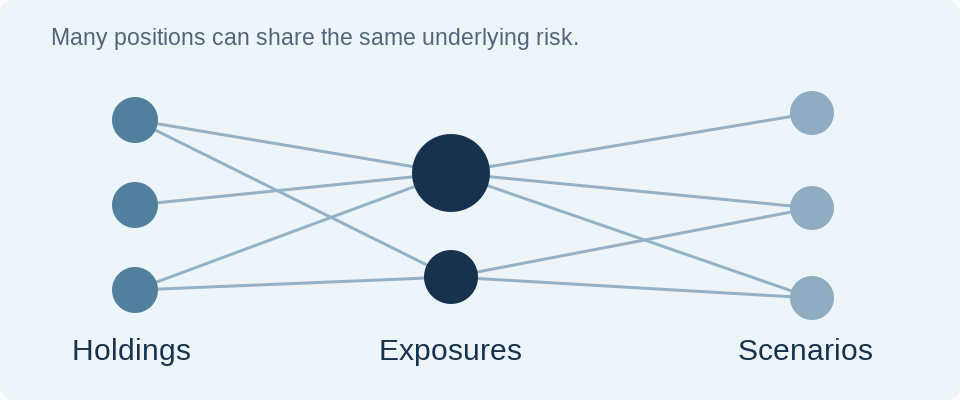
A reassuring share of fixed interest exposure answers part of a REIT's income question. It does not establish how a maturing loan will be replaced, or what happens when an old hedge expires. The useful assessment follows principal funding, interest repricing and the claims on property income separately, then examines where those paths meet.
- Debt maturity and the expiry of interest protection create different financing exposures.
- An established replacement facility can change the meaning of a scheduled repayment, while total undrawn lines are not identical to committed funding.
- A hedge repricing can affect income even when principal refinancing is managed separately.
- Debt repayment through equity or asset sales can improve funding flexibility while changing the claims on, or sources of, distributable income.
Debt service and debt replacement answer different questions
MoneySense explains that REIT distributions depend on income and can be reduced by higher debt costs. It also identifies a separate refinancing problem: distributing substantial income can leave limited reserves for repaying loans. Replacement borrowing, equity financing or property sales may then become relevant. The property sale route has its own constraint because disposals can be difficult at short notice. These mechanisms connect financing choices with both the unit price and income distribution. (MoneySense REIT income, refinancing and property liquidity risks)
The Office of the Comptroller of the Currency defines refinancing risk around replacing existing debt on reasonable terms when it comes due. Its economic explanation focuses on principal remaining at maturity and dependence on recurring borrowing. Paying interest successfully today consequently does not, by itself, establish that the principal replacement is arranged. A REIT income assessment needs to distinguish servicing the existing contract from obtaining the financing that will succeed it. (Office of the Comptroller of the Currency refinancing mechanism)
Interest protection has a separate expiry
Mapletree Industrial Trust's annual report for 2025/2026 attributes lower cash distributions from its Mapletree Rosewood Data Centre Trust joint venture mainly to higher borrowing costs after matured swaps were repriced. Those swaps had been contracted at lower rates. The report separately describes staggered principal maturities and proactive refinancing. It also reports lower borrowing costs at MIT overall. The joint venture attribution therefore illustrates hedge repricing, rather than explaining every parent financing or income movement. (Mapletree Industrial Trust swap expiry, property income and principal refinancing)
Parkway Life REIT's response published on 14 April 2025 describes extending maturing debts and the corresponding hedges together. The manager said this would make potential interest cost changes affect distribution per unit gradually, even if financing costs rose against earlier years. Its quoted hedge exposure was a snapshot at 31 December 2024. This is a historical management explanation of coordinated extensions, with the publication date distinct from the date of the exposure measure. (Parkway Life REIT debt and corresponding hedge extension explanation)
These accounts distinguish the calendars rather than proving that they always coincide. If a loan outlasts its interest protection, repricing can affect income before principal maturity. If replacement borrowing is arranged but an older favourable hedge expires, the funding bridge can be credible while the interest bill changes. MIT's joint venture experience illustrates the repricing mechanism; Parkway's explanation gives a coordinated management response. The financing assessment must follow both events rather than treating a hedge share as a repayment schedule. (Mapletree Industrial Trust swap expiry, property income and principal refinancing; Parkway Life REIT debt and corresponding hedge extension explanation)
An arranged replacement changes the maturity interpretation
Frasers Centrepoint Trust's presentation dated 22 October 2026 reports that a new facility for debt maturing in FY27 had been established in the last quarter of FY26. It describes the debt profile as staggered and assesses FY27 refinancing risk as resolved. The financing statement sits alongside a debt schedule dated 30 September 2026. An arranged replacement and the original scheduled maturity are different observations within that disclosure, rather than evidence of contradictory debt records. (Frasers Centrepoint Trust refinancing arrangements and committed facility distinction)
FCT's separate financial statements for the year ended 30 September 2026 identify ongoing borrowing conditions tied to financial ratios and report compliance throughout that financial year. They also identify the reporting currency as Singapore dollars and state that the condensed statements had not been audited or reviewed. This document adds a different kind of evidence to the presentation: historical borrowing conditions and reported status, rather than an unconditional promise about every future use of financing facilities. (Frasers Centrepoint Trust borrowing covenants and financial statement scope)
The presentation also distinguishes total undrawn facilities from a smaller committed amount. Treating the whole undrawn figure as unrestricted replacement cash would erase that distinction, while historical compliance cannot certify every future drawing condition. Yet ignoring the established refinancing facility would make the opposite mistake. The more defensible interpretation credits the arrangement against the relevant maturity, then tests the remaining conditions. It neither declares all borrowing needs unfunded nor converts management's reassurance into universal financing certainty. (Frasers Centrepoint Trust refinancing arrangements and committed facility distinction; Frasers Centrepoint Trust borrowing covenants and financial statement scope)
Funding protection need not increase each unit's income
CapitaLand Ascendas REIT's release of 5 August 2026 describes equity proceeds supporting acquisitions and repaying debt, with lower leverage at 30 June 2026 than at the preceding quarter end. The release also reports an enlarged unit base and stable distribution per unit for the first half of 2026. These are simultaneous reported outcomes. Reducing debt through an equity financing changed the balance sheet while the income measure per unit followed its own disclosed path. (CapitaLand Ascendas REIT equity proceeds, debt repayment and enlarged unit base)
CLAR's example prevents an easy inference from safer financing to rising income for every existing unit. More equity claims can accompany debt repayment and an acquisition programme; the resulting distribution depends on the combination. Stable DPU in that release does not show that the financing destroyed value, nor does lower leverage alone establish a larger distribution per unit. The income assessment must consider the changed capital structure alongside the property portfolio, rather than awarding a distribution gain from the debt reduction itself. (CapitaLand Ascendas REIT equity proceeds, debt repayment and enlarged unit base)
Property performance can compound financing exposure
The Reserve Bank of Australia's analysis published on 21 September 2023 describes weak leasing conditions reducing commercial property income and asset value together. It connects that combination with debt service and refinancing pressure, particularly when borrowing terms become harder to obtain. Forced disposals can then reinforce valuation weakness. This historical mechanism concerns linked property and funding risks; it is not evidence that the Singapore issuers discussed here were experiencing those conditions at their reporting dates. (Reserve Bank of Australia rental income, valuations and refinancing interaction)
If lease income weakens while replacement finance is being negotiated, the pressure can reach both servicing capacity and the asset values supporting the financing case. Interest protection alone cannot resolve that operating deterioration. Conversely, where property performance remains sound and funding is arranged, importing a distressed refinancing narrative would require additional evidence. The RBA mechanism makes the distinction consequential: the financing calendar matters through its interaction with the property business, rather than as a standalone prediction of trouble. (Reserve Bank of Australia rental income, valuations and refinancing interaction)
Give the calendar a conditional income interpretation
The OCC's economic account identifies leverage, liquidity, financial performance and concentrated approaching maturities as distinct refinancing drivers. A reassuring leverage figure therefore cannot determine the answer without the maturity and funding evidence. Nor can a scheduled repayment alone establish an inability to refinance. Greater concern is justified when the obligation remains dependent on uncertain replacement terms, particularly alongside weaker performance. Evidence of an established matching arrangement changes that judgment without settling the subsequent cost of debt. (Office of the Comptroller of the Currency refinancing mechanism)
For an ownership income thesis, the preferred sequence is to establish the funding bridge and then assess what remains for the units. MoneySense's alternatives show why the bridge itself can change that outcome: property sales alter the assets producing income, while equity financing changes the claims on it. If the plan depends on a prompt sale in difficult conditions, the disposal constraint deserves weight. Credible replacement funding instead moves the central question towards ongoing property income and the financing burden after repricing. (MoneySense REIT income, refinancing and property liquidity risks)
Editorial assessment. The decisive distinction is between principal funding protection, interest repricing protection and income per unit. An unresolved maturity backed only by an aggregate liquidity headline deserves a more demanding funding assessment. An established replacement arrangement and coordinated debt and hedge extensions support a less alarming interpretation, subject to their actual terms. That conclusion does not award an income guarantee: expiring protection can change borrowing costs, and debt repayment through new capital can alter each unit's claim on the property income. The calendar becomes useful when it identifies which of these exposures remains unresolved and what new evidence would change the assessment.
Evidence scope. Issuer illustrations retain their stated reporting periods and do not establish current financing status or a ranking across REITs. FCT's presentation and financial statements are separate documents from the same institution; neither certifies every future facility condition. MIT's swap repricing attribution concerns the named joint venture. Parkway's response is historical management reasoning. The RBA and OCC provide economic mechanisms, without a forecast, current stress diagnosis, numerical sensitivity or universal distribution conclusion.
Sources and further reading
- Understanding real estate investment trusts (REITS)
- Commercial Lending: Refinance Risk
- Financial Stability Risks from Commercial Real Estate
- Mapletree Industrial Trust Annual Report 2025/2026
- Financial Results for the Second Half and Full Year ended 30 September 2026
- Annual General Meeting on 21 April 2025: Responses to the substantial and relevant questions
- CapitaLand Ascendas REIT’s 1H 2026 distributable income increases by 8.6% year-on-year to S$359.4 million
- Condensed Interim Financial Statements for the Six-Month Period and Financial Year ended 30 September 2026