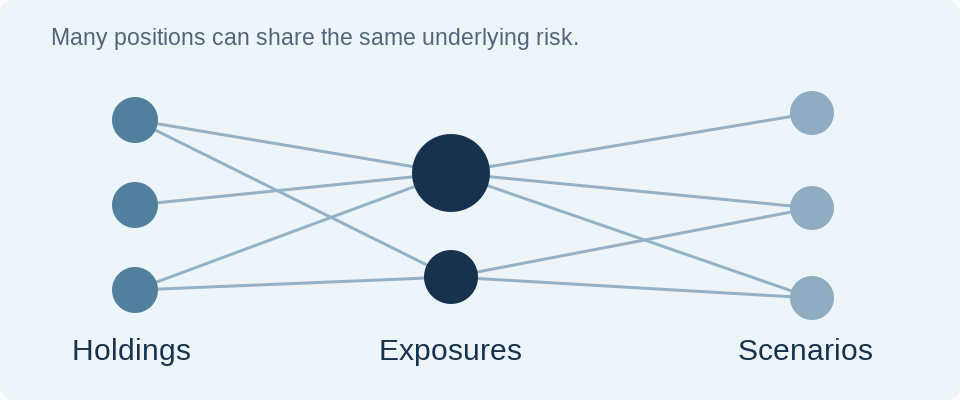
Keeping a trading rule unchanged leaves another choice open: which candidate or stopping date appears in the report. A later backtest can be arithmetically correct yet selected through a process its uncertainty estimate does not describe. The distinction matters when deciding what, exactly, an investor has evidence to allocate to: a fixed rule or the procedure that chose it.
- Unchanged trading rules do not establish that the reported candidate, test window or stopping decision was chosen independently of its result.
- A planned acceptance test is not invalid simply because its result influences deployment; the inference must account for the procedure actually used.
- Selection corrections require credible information about the candidate family, dependence and unreported attempts.
- Evidence for a complete rolling selection policy and evidence for its final fixed component support different investment claims.
The trading rule and the reporting process can diverge
Dwork and coauthors identify testing many predictors on a holdout and reporting only the best as a source of dependence on that holdout. The candidate rules need not change for the chosen result to depend on their scores. Applied to backtesting, unchanged trading code therefore settles only part of the evidence question. The reported winner may have been selected from fixed alternatives, so its score cannot silently inherit the interpretation of a candidate chosen before that comparison. (Dwork and coauthors on holdout selection, reporting and adaptive queries)
Arnott, Harvey and Markowitz's backtesting protocol makes the stopping history consequential. Their illustration considers researchers encountering a success at different points in a candidate search. An early success does not establish that the successful candidate was the only contemplated test. The relevant record includes the planned family, its relationships and why the search stopped. This changes the interpretation of a first success without declaring that every untested idea is an independent experiment or that ordinary rejection is improper. (Arnott, Harvey and Markowitz on research records, first success and changing markets)
A planned admission decision remains a legitimate use of testing
A single later test with a previously specified rule, horizon and acceptance criterion is a different case. Accepting or rejecting the rule because of its score is the purpose of that validation, not automatic contamination. Dwork's paper also distinguishes a known, independently specified candidate family, for which multiple testing can be accounted for, from adaptive choices based on earlier analyses. The decisive issue is whether the claimed uncertainty matches the actual decision process and its assumptions. (Dwork and coauthors on holdout selection, reporting and adaptive queries)
Johari, Pekelis and Walsh's preprint Continuous Monitoring of A/B Tests develops inference designed to accommodate decisions about when to stop. It explicitly contrasts this with calculations that ignore the feedback from statistical output to experiment design. Its framework begins with independent observations from an exponential family and constructs measures with stopping aware error control. This is evidence that valid monitoring is possible within a designed statistical framework, rather than evidence that any repeated inspection is harmless. (Johari, Pekelis and Walsh on stopping-aware inference and its assumptions)
Consider an unchanged trading rule whose evaluation window is extended after disappointing scores, with only the eventual favourable endpoint reported. A calculation designed for a fixed endpoint does not automatically account for that selection. By contrast, a stopping aware procedure may address monitoring under its own assumptions. The preprint's result therefore supports examining the stopping rule, not banning observation. Declaring a plan in advance is useful, but cannot repair inference that still ignores the plan's search or stopping decisions. (Johari, Pekelis and Walsh on stopping-aware inference and its assumptions)
The final formula can conceal earlier choices
The University of Rochester working paper on multiple signals studies choices inside combined strategies. It describes selecting signal directions using their performance in the estimation sample, and separately considers the discretion to assign different signal weights. These are ways that observed results enter construction even when the finished formula looks simple. The mechanism concerns choices made from the data; it does not imply that every combination of signals, or every blend specified before evaluation, is overfitted. (Novy-Marx on search choices inside combined signals)
For a selected blend, freezing the final formula records what will trade, but not how its signs, components or weights were chosen. If the later period helped choose those elements, calling the formula fixed does not restore an untouched test of that choice. If construction was completed before a genuinely separate evaluation, the interpretation differs. The paper's mechanism makes the distinction practical: the search record concerns decisions entering the exposure, rather than merely the apparent complexity of the code. (Novy-Marx on search choices inside combined signals)
A correction needs the search it claims to correct
Bailey and López de Prado's Deflated Sharpe Ratio manuscript addresses selection among alternatives and features of the return distribution. Its inputs include information about unselected trials, effective independent experiments, sample length and the shape of returns. The authors also warn that approximating dependence with an average correlation can itself be unstable or overfitted. The method therefore relies on more information than the winning strategy's final statistic, and its inputs remain substantive research assumptions. (Bailey and López de Prado on unselected trials and uncertain effective trial counts)
Harvey and Liu's Backtesting paper explains why the trial history is difficult to supply: some attempted strategies are unobserved, and strategy returns are correlated. Treating every closely related variant as independent can misdescribe the search, while counting only retained successes omits another part of it. Their discussion calls for judgment and sensitivity to assumptions. A correction should consequently expose uncertainty about the search family, rather than turn a guessed trial count into apparent precision about a strategy's merit.
The Probability of Backtest Overfitting manuscript by Bailey and coauthors defines a particular ranking event: a configuration optimal in the estimation sample performs below the median of the comparison configurations outside that sample. It treats probability of loss as a distinct quantity available within the broader framework. A PBO estimate is therefore not a forecast probability that an investor will lose money. Its meaning depends on the configuration set and evaluation design being studied.
Evaluate the selector if the selector will invest
Cawley and Talbot's University of East Anglia research treats model selection as part of fitting, rather than a step outside performance evaluation. It argues that selection must be repeated within the evaluation of a newly fitted model and that comparisons concern algorithm and selection procedure combinations. The paper discusses nested evaluation for that purpose. Its learning examples establish a methodological distinction, without establishing that random partitions or a named validation technique automatically handle financial chronology and dependence. (Cawley and Talbot on evaluating the selection procedure with the model)
Suppose the intended investment repeatedly selects among candidates using information available at each decision. Its historical object is the sequence produced by that selector, including when it admits or replaces a component. Evaluating only the last winner as though it had been held throughout answers a different question. Cawley and Talbot's procedure principle, together with PBO's explicit configuration comparison, favours evaluating the selection process itself under suitable chronological and statistical assumptions, rather than transferring its evidence automatically to the final rule. (Cawley and Talbot on evaluating the selection procedure with the model; Bailey and coauthors on selection ranking and the meaning of PBO)
Preserve the record while narrowing the claim
Missing research records cannot be reconstructed from a reassuring adjusted score. The DSR inputs and Harvey and Liu's unobserved trial problem explain why both rejected alternatives and dependence estimates matter. This need not erase the recorded trades or their arithmetic. It narrows the validation claim when the actual selection process is uncertain. The useful response is to retain that descriptive result, disclose the unresolved search, and distinguish it from evidence designed to evaluate the intended decision procedure. (Bailey and López de Prado on unselected trials and uncertain effective trial counts; Harvey and Liu on unobserved tests, dependence and test information)
The strongest case would document the planned candidates, evaluation period, decision criteria and actual stopping or reporting history, then use inference suited to that process. Evidence of unaccounted extra attempts or retrospectively changed windows would weaken it. Even a credible full procedure test remains a historical claim: Arnott, Harvey and Markowitz emphasise changing economic relationships and limited data. The investment question is consequently which exposure the tested policy would actually have held, and whether its evidence survives the procedure that selected it. (Arnott, Harvey and Markowitz on research records, first success and changing markets)
Editorial assessment. The decisive boundary is between a candidate's trades and the procedure that gives those trades an investment role. A planned single acceptance test can support its intended decision under the relevant assumptions. Hidden comparisons, additional attempts or result dependent reporting need different accounting, even if no trading parameter changes. If a rolling selector is the intended investment, its choices through time are the object to evaluate; its last component does not inherit that record as a permanent strategy. This assessment preserves historical arithmetic while requiring the performance claim to name the research and allocation process it actually tested.
Evidence scope. The finance papers provide selection mechanisms and diagnostics, without testing a user strategy or estimating an adjusted statistic here. The general learning and monitoring papers use settings that do not automatically cover dependent, changing market returns. The monitoring source is an author preprint about A/B tests; PBO and DSR are retained author manuscripts, and the multiple signal study is a working paper. No universal split, correction threshold, profitable rule or future loss probability is established.
How to review a completed backtest
Sources and further reading
- Generalization in Adaptive Data Analysis and Holdout Reuse
- On Over-fitting in Model Selection and Subsequent Selection Bias in Performance Evaluation
- The Probability of Backtest Overfitting
- The Deflated Sharpe Ratio: Correcting for Selection Bias, Backtest Overfitting and Non-Normality
- Backtesting
- Backtesting Strategies Based on Multiple Signals
- A Backtesting Protocol in the Era of Machine Learning
- Always Valid Inference: Continuous Monitoring of A/B Tests