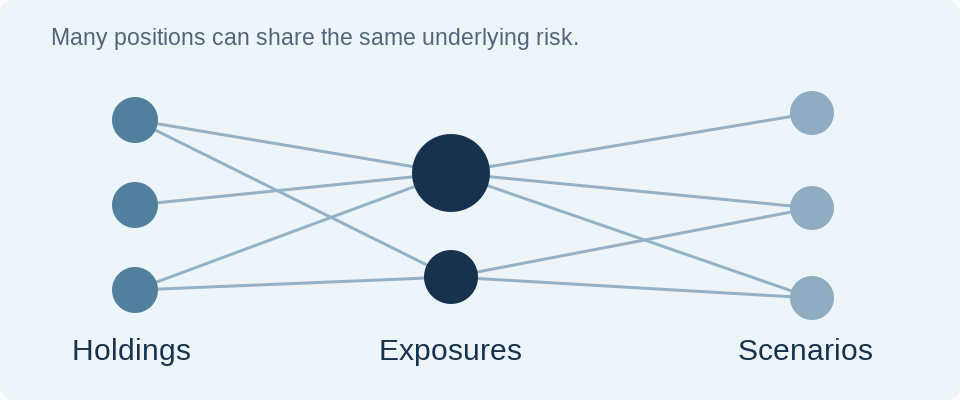
A return chart can regain its old high while withdrawals leave less invested. Portfolio recovery after withdrawals also concerns the capital available for future payments.
- Removing cash flows makes investment returns comparable, while leaving capital needs unresolved.
- Withdrawals during declines reduce the assets participating in a rebound.
- Spending flexibility protects capital by accepting a different income path.
What has actually returned to its previous high
CFA Institute’s GIPS glossary defines a time weighted return by its adjustment for external cash flows. Its money weighted counterpart reflects their size and timing. A chart using the first method can describe investment progress without reproducing the changing account balance, because cash removed has been neutralised in the return calculation. (CFA Institute)
Assume investment exposure continues while cash leaves the account. A recovered return series establishes recovery on that series’ basis. It cannot establish that the original capital is present again. Conversely, a contribution could restore the balance before investment returns recover. The question needs a named object of recovery before an old high becomes meaningful evidence. (CFA Institute)
The special case that makes sequence look harmless
BlackRock’s educational illustration separates a portfolio without external additions or withdrawals from one paying out money. Its hypothetical paths show why the ordering of a given return sequence can leave the final value unchanged in the first case yet affect it in the second. The document labels its figures illustrative; they are neither realised investor records nor estimates of future recovery. (BlackRock)
Without external flows, rearranging the same periodic growth factors leaves their product unchanged. That arithmetic concerns the final value, rather than the depth or timing of intervening losses. Insert fixed withdrawals between periods and the amount exposed to later growth changes. The no withdrawal result consequently offers weak reassurance about a portfolio required to fund spending throughout the decline. (BlackRock)
A rebound works on the assets left behind
Schwab explains that raising a fixed cash amount while investment values fall requires disposing of more assets. Fewer remain to participate in a later recovery. It also describes liquid reserves as a way of meeting expenses while avoiding immediate stock sales. This explains a funding mechanism, without establishing that every decline requires the same response. (Charles Schwab)
Suppose units are sold during a decline and their price subsequently regains its earlier level. That recovery does not recreate the withdrawn units. Continuing spending can further reduce the quantity participating. Reconciliation follows dated payments and remaining holdings through the rebound. Comparing only the chart’s trough and ending level misses the recovery opportunity that has already left the portfolio. (Charles Schwab)
A fair manager comparison is the strongest alternative
Interactive Brokers’ performance paper describes money weighted measurement as reflecting the investor’s experience, including deposit and withdrawal timing. It describes linking subperiod returns for time weighted measurement and observes that managers typically have little control over external flows. This supplies a strong reason to retain a return measure independent of a client’s funding decisions when evaluating investment management. (Interactive Brokers)
If a client chooses the withdrawals, treating the resulting lower balance as proof of poor security selection would confuse responsibilities. A time weighted comparison can remain valid while the spending plan weakens. A money weighted calculation adds information about the historical cash flow experience, but does not by itself determine whether future payments are affordable. Neither historical return measure specifies those future obligations. (Interactive Brokers)
Preserving assets can require an income concession
Vanguard’s June 2020 study examines hypothetical retirements around historical US bear markets. It assumes a balanced stock and bond portfolio supplies all retirement income. Its adaptive approach changes withdrawals with portfolio value, subject to spending bounds. The historical exercises find improved depletion outcomes relative to the fixed spending approach. Those results belong to the study’s market paths and assumptions. (Vanguard)
Reducing withdrawals after a loss leaves more capital available for subsequent returns, conditional on the same investment path. But the lower payment is part of the result, rather than a free improvement. A comparison that rewards only the final balance can favour a policy because it delivered less income along the way. Funding research needs to assess the payment path alongside the capital retained. (Vanguard)
Flexibility matters only when the cuts are feasible
Capital Group emphasises the interaction between poor early returns and rigid withdrawals. It frames spending adjustments as a controllable response to uncertain markets. This supports examining the spending rule, without establishing that every household can reduce its payments when markets fall. (Capital Group)
Where expenses can adjust, the assessment favours testing that flexibility before treating a recovered chart as restored funding capacity. Where essential payments are fixed, required cuts may defeat the purpose despite preserving assets. Reliable outside income covering those payments would change the withdrawal exposure. The decisive evidence concerns spending the portfolio must actually support. (Capital Group)
A funding buffer changes the investment bargain
The SEC’s asset allocation guide connects the investment mix with the horizon of the financial goal. It identifies inflation as a principal risk for cash equivalents and warns that insufficient growth potential can also jeopardise a goal. These considerations make a capital preservation objective incomplete unless it states which payments are protected and for how long. (US Securities and Exchange Commission)
For payments due soon, a liquid buffer can reduce dependence on a timely market rebound. Holding more cash also changes participation in subsequent growth and leaves purchasing power exposed. The relevant comparison includes that buffer within the total portfolio, rather than judging only the assets still invested in stocks. Its case strengthens when fixed near payments dominate; a distant, flexible spending objective creates a different balance of risks. (US Securities and Exchange Commission)
Editorial assessment. For a spending objective, a recovered return curve deserves less weight when required payments still strain remaining capital.
Evidence scope. Historical scenarios illustrate mechanisms without estimating current recovery times, affordable withdrawals or an investor’s appropriate allocation.
Reviewing the assumptions behind a completed backtest
Sources and further reading
- 2020 GIPS Standards for Firms
- Money Weighted Return and Time Weighted Return White Paper
- What Is Sequence-of-Returns Risk?
- Sequence of returns
- Safeguarding retirement in a bear market
- Is sequence-of-returns risk really sequence-of-withdrawals risk?
- Beginners’ Guide to Asset Allocation, Diversification, and Rebalancing