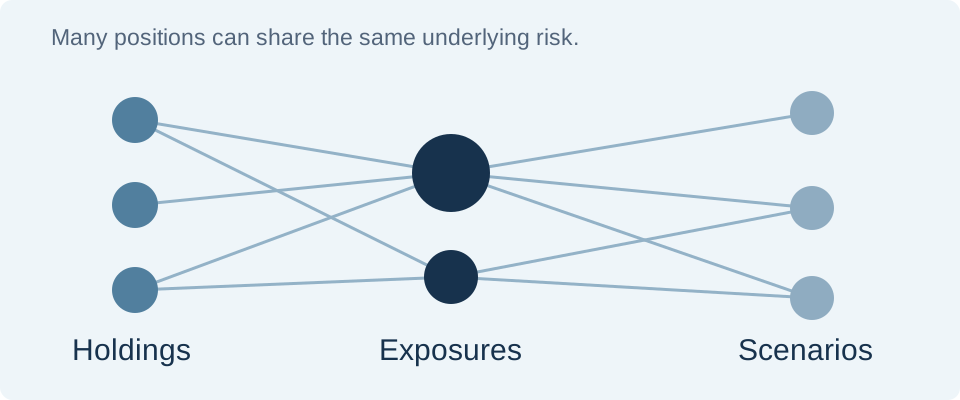
An asset can remain on an eligible collateral list while its accepted financing value falls. Collateral eligibility and margin calls therefore concern different stages of the same transaction. Entry into a facility does not settle how much coverage the asset provides after revaluation, or whether the borrower can supply more assets or cash when required. The liquidity question begins where the eligibility label stops.
- Eligibility permits use; valuation and haircuts determine accepted coverage.
- A coverage shortfall can require more assets or cash without removing eligibility.
- The June and October 2026 Bank of England changes affect distinct parts of the collateral rules.
Entry into the facility is only the first stage
The Bank of England's Market Operations Guide describes broad collateral eligibility subject to its ability to manage the assets' risks and apply a discount to market value. Higher quality assets require lower haircuts in that account because they offer more protection against value volatility. The haircut is designed to protect the lender if the borrower defaults. That purpose does not establish the borrower's ability to meet a later cash demand or guarantee that a collateral sale will be frictionless. [1]
The transaction should be followed in sequence: determine whether the asset qualifies, establish its recognised market value, and apply the relevant discount. The Bank's description makes quality relevant to the discount without allowing quality to replace the valuation step. If market value falls while the asset stays eligible, accepted coverage can fall too. This conditional case explains the apparent paradox. The eligibility decision remains favourable while the financing capacity supported by the same asset becomes less favourable. [1]
Revaluation turns a coverage change into an obligation
The ECB's Risk control account says that haircut adjusted market value must be maintained over time in the relevant liquidity operations. When regularly measured collateral value falls below a specified level, the national central bank requires additional assets or cash. Revaluation above the relevant level can allow excess collateral to be retrieved. The mechanism links changing coverage to a borrower obligation without implying that every price change causes an immediate call or identifying an unspecified threshold. [4]
Under that maintenance rule, the borrower's research problem is concrete. Can acceptable additional assets or cash be provided when the obligation arises? A claim that the existing bond remains eligible does not answer it. Nor does a belief that the price decline will reverse later, because coverage is tested under the applicable valuation process. This separates the asset's investment thesis from the balance sheet's ability to keep financing it through the interval when the shortfall exists. [4]
The ECB's paper on valuation haircuts explains why their design balances lender protection with policy implementation. Frequent large changes in discounts during stress can introduce procyclical tightening, so stability in the schedule has a policy rationale. A stable haircut can reduce one source of changing coverage while leaving market value exposed. It would therefore be a mistake to infer that stable official discounts make accepted collateral value or the borrower's financing need stable as well. [3]
What the June and October changes actually cover
The Bank of England's June 11, 2026 notice expands eligibility from June 19 for qualifying high quality debt of specified government linked entities, regional and local governments, and development or policy banks. The notice also dates the index linked haircut schedules to June 19. It separately sets October 31 for classifying all eligible corporate bonds as Level B and for new corporate haircuts and relevant additions. These are distinct dates for distinct changes, rather than a single facility wide switch. [2]
The October 31, 2026 corporate changes have their own implementation date. The June measures and the October corporate measures should therefore be matched to the relevant asset and rule separately. Broader eligibility changes entry, while a new haircut changes the accepted value calculation. Treating both as an undifferentiated improvement in liquidity would conceal which part of the transaction changed. The notice alone does not provide the full terms or valuation of a particular borrower's position. [2]
Stress can connect the top up to the price decline
The Bank of England's anatomy of the 2022 gilt crisis links deteriorating repo and derivative positions at liability driven investors to selling pressure and evaporating market liquidity. It reports that firms in the relevant pension, insurance and investment sector with larger prior repo and swap exposures sold more gilts during the crisis. This is historical evidence that financing positions matter to forced adjustment, rather than proof that the same process is occurring in a current collateral facility. [5]
The episode makes the top up question economically significant. If obtaining cash requires selling assets into a stressed market, the financing response can interact with the price pressure that created the need. The historical study motivates investigating that dependency; it does not quantify it for another borrower. A stronger liquidity assessment would identify resources available without relying on the same strained exit. The relevant reassurance concerns the feasible response to the obligation, rather than the asset's eligibility alone. [5]
The BIS report on margin requirements and haircuts places eligibility, lending conditions and discounts within a broader procyclicality problem. Applied here, the borrower can face several changing constraints even if one official rule is stable. A private financing arrangement need not follow the central bank schedule. The full assessment should therefore identify which lender and contract create each obligation. Otherwise an official collateral improvement could be mistaken for relief on a separate financing relationship that has not changed. [6]
Keep lender protection and borrower resilience distinct
The strongest reassuring interpretation is that predictable official haircuts help avoid an additional tightening during stress. The ECB haircut paper supports that design objective. It remains conditional reassurance: predictability in the discount cannot prevent a market valuation loss or establish the borrower's reserve of acceptable assets. The analysis should credit the stable rule for the risk it addresses, then judge the coverage shortfall and available response separately. That gives the policy feature a precise role without overstating its protection. [3]
BIS research on money markets models banks with leverage, liquidity and collateral constraints and compares central bank lending with a counterfactual lacking that intervention. Its benchmark includes collateralised lending at discounts lower than those available privately. The study establishes a setting in which facility terms can change financing constraints. It does not supply a current loan quote or a quantified benefit for this article's case. Actual resilience still turns on the applicable terms and the borrower's resources when coverage must be restored. [7]
Editorial assessment. The assessment follows a single collateral position from entry through accepted coverage to the possible top up. It locates the decisive break between asset quality and borrower liquidity: an eligible asset can support less financing after revaluation, creating an obligation before an investment thesis has time to recover. The June and October changes are placed at the stage each actually affects, rather than treated as one general liquidity signal.
Evidence scope. No current borrower, collateral threshold, haircut number or cash call amount is assumed. The undated guide and risk control pages establish mechanisms rather than an observation date. The gilt episode is historical, and the BIS model is not a current facility experiment. Only the index linked scope stated in the notice is used.
Sources and further reading
- Bank of England Market Operations Guide: Our tools
- Changes to collateral eligibility in the Sterling Monetary Framework
- The valuation haircuts applied to eligible marketable assets for ECB credit operations
- Risk control
- An anatomy of the 2022 gilt market crisis
- The role of margin requirements and haircuts in procyclicality
- Money markets, collateral and monetary policy