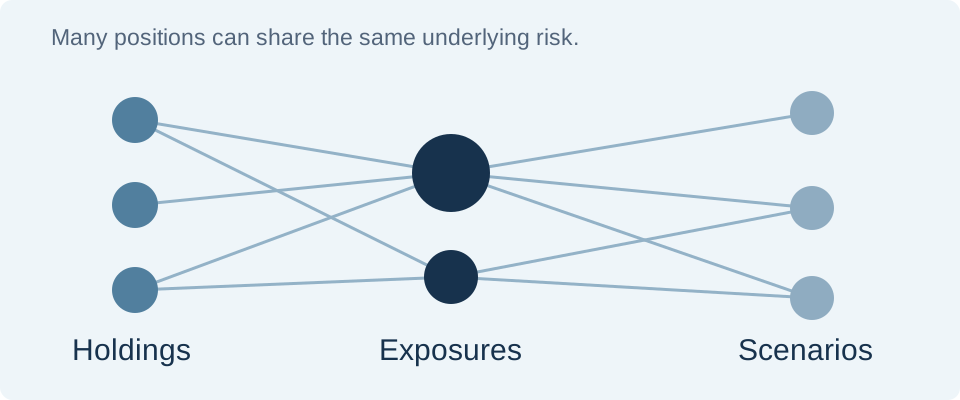
A fund's stated currency hedge can fit its dollar share class while leaving an investor's Singapore dollar spending exposed. Understanding the remaining risk requires tracing what is held, what the hedge targets and how the investment will ultimately be used. The currency displayed beside an exchange price cannot answer those questions on its own.
- A trading currency identifies a transaction convention rather than the complete currency exposure of the investment.
- The hedge target must be read from the actual share class policy; different fund families describe different operations.
- A USD target can leave SGD conversion risk, even if the hedge works as intended relative to USD.
- Retaining currency exposure can be deliberate, but its purpose and consequences belong in the allocation assessment.
A dollar hedge leaves another conversion to consider
MoneySense explains that foreign currency bond payments face a conversion question: exchange movements affect both interest receipts and principal when expressed in Singapore dollars. It separately identifies default, interest rate and liquidity risks. Currency exposure therefore sits alongside other bond risks. A description of the bond's payments in its own currency does not establish how much spending power those payments will represent after conversion into SGD. [8]
Consider a bond share class whose underlying currency exposure is hedged towards USD, held for future SGD spending. The iShares USD distributing class describes that hedge aim. Conditional on the portfolio value being unchanged in USD, its SGD value can still change when the USD to SGD relationship moves. This is conversion logic, rather than a measured Singapore performance result or evidence that the disclosed hedge has failed. [3] [8]
The SGD accumulating class of the same iShares global bond fund makes the distinction visible. Its shares are expressed in Singapore dollars although the fund's base currency is USD. Its stated hedge aims to reduce fluctuations between the share currency and currencies in the underlying portfolio, using derivatives including currency forwards. The document also warns that the hedge may leave currency risk. Fund base currency and share currency serve different roles here. [4]
Trading denomination answers a transaction question
Deutsche Börse separates the currencies of underlying securities, fund accounts, exchange trading and the investor's income and spending. Reporting currency has an accounting role, while exchange denomination is distinguished from economic currency risk. These layers prevent every currency printed on a fund page from being treated as the same exposure. [2]
A different trading line alone supplies no evidence that the portfolio or hedge policy has changed. Transaction currency can still matter: the iShares disclosure warns that a difference in trading currency may affect share performance. The narrower conclusion is about exposure. A price quoted in SGD does not, by itself, establish that underlying foreign currencies have been hedged towards SGD. [2] [3]
The defensive role supplies the relevant reference currency
Vanguard's global bond research summary connects international diversification with currency control. It reports supporting evidence across the United States, Canada, the United Kingdom, the euro area and Australia, with exposure hedged towards the investor's home currency. Its explanation is that unmanaged exchange movements can overwhelm bond returns and disrupt the intended stabilising role. These named markets define the empirical scope; the summary does not establish a Singapore result. [1]
For a mandate seeking stability relative to a defined spending currency, the research gives a reason to prioritise that reference over a convenient fund quotation. The argument depends on currency risk being unwanted in the defensive allocation. If that assumption holds, leaving an unrelated currency position inside the allocation can work against its stated job. This is a conditional assessment of the exposure, without promising that hedging guarantees a better future result. [1]
The word hedged can describe different operations
BlackRock Global Funds describes a different arrangement in its share class guide. A currency overlay hedges the class NAV between fund base currency and hedge currency. The guide expressly distinguishes this from hedging the portfolio's individual assets and says the fund's investment management is unaffected. It also describes possible mismatches and uncertain success. This is a particular fund family's NAV hedge description, rather than a universal definition of hedged share classes. [5]
That NAV description cannot simply be transferred to the iShares SGD class, whose disclosure names the underlying portfolio currencies in its hedge aim. Conversely, the iShares wording cannot establish how every other fund operates. The research consequence is specific: identify the currencies on each side of the actual hedge before assessing the remaining position. A familiar class label is weaker evidence than the documented relationship it is supposed to manage. [5] [4]
The Reserve Bank of Australia's historical explanation describes a currency forward as an agreement to exchange currency at a future date for a price fixed in advance. It also frames a firm's hedge decision around net currency exposure, including assets, liabilities and trade. The mechanism addresses a specified currency relationship and timing. Its effectiveness as a match consequently depends on which exposure and obligation the analysis is trying to connect. [6]
Retained currency exposure can have a deliberate purpose
Suppose the intended obligation is in USD, even though the portfolio owner also spends in Singapore. A USD reference can then be coherent for that obligation. The Reserve Bank's net exposure reasoning also cautions against evaluating offsetting positions in isolation. This conditional case changes the objective against which the hedge is judged. It does not claim that residence identifies every spending commitment, or that the same hedge fits the entire portfolio. [6]
A second defence retains currency exposure intentionally. Deutsche Börse notes that exchange movements can help as well as hurt returns. Seeking that participation is a different objective from stability against spending. The currency position needs its own rationale; possible upside alone establishes neither a better defensive bond allocation nor reliable diversification of other holdings. [2]
Assess the exposure delivered as well as the stated policy
BIS research estimates funds' currency exposure from return sensitivity after accounting for returns generated by their assets. Its framework allows for absent, partial, full or excessive hedging. The paper also relates hedge pricing to the difference between currency forward and spot prices. Its example involves euro denominated shares and American assets, rather than measurements of the iShares classes or a Singapore investor's portfolio. [7]
The policy therefore needs an implementation assessment rather than a verdict from one price movement. BIS's method illustrates why an exposure estimate must distinguish the currency contribution from underlying asset returns. Applied conditionally to a spending mandate, meaningful residual currency sensitivity would weaken a claim of effective matching, even when the label appears suitable. Evidence on the actual hedge, return reference and implementation cost would determine how much confidence the defensive interpretation deserves. [7]
Editorial assessment. The preferred interpretation starts with the obligation and traces the actual hedge back to it. For SGD spending with no intended dollar position, a USD hedge leaves a consequential mismatch even if it delivers its stated USD objective. For dollar obligations or deliberate currency participation, the same target can be coherent under a different mandate. Trading denomination cannot resolve that choice. Matching the target improves the logic of the defensive allocation, while evidence about residual exposure, implementation and retained bond risks determines how far the protection claim can go.
Evidence scope. The SGD example is a conditional conversion argument, with no estimated volatility or performance advantage. Vanguard's summary draws on older research in markets outside Singapore. The iShares disclosures and BlackRock Global Funds guide describe different hedge relationships and are not interchangeable policies. The Australian evidence supplies historical mechanics; BIS supplies a research method rather than a Singapore estimate. No current hedge cost, currency forecast or risk elimination is established.
Related research on the bond price exposure that currency hedging leaves in place
Sources and further reading
- Going global with bonds: Unlocking diversification through global fixed income
- Benefits and disadvantages of hedging exchange rate risks
- iShares Core Global Aggregate Bond UCITS ETF USD Hedged Distributing: Key Investor Information
- iShares Core Global Aggregate Bond UCITS ETF SGD Hedged Accumulating: Key Investor Information
- BlackRock Global Funds: Hedged Share Classes Explained
- Limiting Foreign Exchange Exposure through Hedging: The Australian Experience, Hedging Instruments
- Investment funds’ de facto currency risk exposure
- Understanding bonds