A bullion trust is designed around the metal it holds. Comparing it with a producer starts with the investment claim the portfolio is meant to own.
- Higher metal prices can accompany higher mine expenses.
- A quarterly cost increase can partly reflect spending timing.
- A collection of mining shares retains exposure to the industry.
The share is a different claim
VanEck’s explanation of its mining funds distinguishes the companies from the commodity. It describes mining shares as exposed to uncertainties arising from listed equity ownership and warns that the result from owning them may diverge from gold. The relevance is direct: calling a holding a thesis about bullion does not establish which risks the investor has acquired. (VanEck)
What the bullion vehicle promises
The SPDR Gold Trust’s report for the year ending in September 2025 describes an objective based on the metal’s quoted value after its expenses. An owner holds a stake in the trust, whose gold can be sold to meet those expenses. This structure supplies a different starting point from evaluating a company that must extract and sell a product. (SPDR)
For an objective centred on bullion, that stated design gives the trust a closer conceptual fit. It does not establish a superior future return or remove ownership costs. The relevant distinction is what must happen between bullion’s quotation and the owner’s result, rather than which vehicle carries the familiar gold label. (SPDR)
The strongest mining case is a business case
In its latest quarterly release, Newmont (NEM) reports cash generated by operations and payments to shareholders. It also describes continuing infrastructure outlays needed by its mines. The disclosure presents an operating enterprise with competing uses for its cash, rather than a passive store of metal. (NEM)
That is the strongest reason to consider the company exposure on its own terms. An enterprise can turn favourable selling conditions into cash that supports investment and shareholder payments. Confidence in that interpretation rises when the disclosed outlays needed to run and develop the mines leave resources available. A view about gold becomes more consequential when accompanied by a defensible account of those requirements. (NEM)
A richer quotation can meet rising expenses
Agnico Eagle (AEM) attributes a greater expense for each ounce produced in its latest quarter partly to wages, diesel, royalties responding to bullion quotations and lower output. It separately identifies capital spent to sustain its mines among the reasons for a higher broader cost measure. (AEM)
If what the producer receives is accompanied by rising expenses, assuming that the entire price increase reaches the shareholder overstates the mechanism. A greater burden for each unit sold can also reflect fewer ounces across which costs are spread. The business interpretation therefore depends on both the numerator and the production base. A price forecast that leaves them fixed needs its own defence. (AEM)
The cost measure has a boundary
The World Gold Council’s guidance distinguishes spending that sustains production from outlays to establish operations or carry out substantial developments. Classification requires management judgment. Its guidance also excludes working capital movements from that measure, apart from certain inventory adjustments. The measure therefore has an explicit boundary even when calculated consistently. (WGC)
A gap between receipts for a unit sold and that cost figure can inform an operating assessment without establishing cash available for the owners. Expansion may consume money beyond that boundary. The analytical consequence is to connect the production measure to the wider spending programme, rather than turning a favourable unit spread directly into a claim about shareholder proceeds. (WGC)
An industry average cannot diagnose a mine
In its November discussion of the second quarter, the council describes weaker bullion quotations alongside rising production expenses. It also notes that increased spending was concentrated in relatively few operations. Some variation between periods reflected when money was spent, so a rise during the quarter did not necessarily imply a matching increase across the year. (WGC)
This qualifies both optimistic and pessimistic readings of the cost data. A sector average cannot establish that a particular producer has lost control of its expenses. Equally, describing a rise as temporary requires evidence about when spending moved and what remains to be paid. Annual plans and subsequent delivery would distinguish a shifted payment schedule from a lasting deterioration in operating economics. (WGC)
Production creates a separate route to disappointment
Barrick ties its decline in bullion output from a year earlier partly to weather disruption at Veladero and difficulties reaching richer ore at North Mara. It also cites grades, royalties and diesel as contributors to greater extraction expenses. These explanations concern the company’s reported quarter and cannot diagnose other producers. (Barrick Mining)
A favourable metal view cannot by itself resolve an interruption at a mine or determine the material available for processing. If those constraints dominate, the missing evidence concerns the recovery of production and the expenses attached to it. A richer quotation for bullion may help the business while leaving that constraint in place. This is a different uncertainty from predicting the commodity. (Barrick Mining)
The portfolio still owns the industry
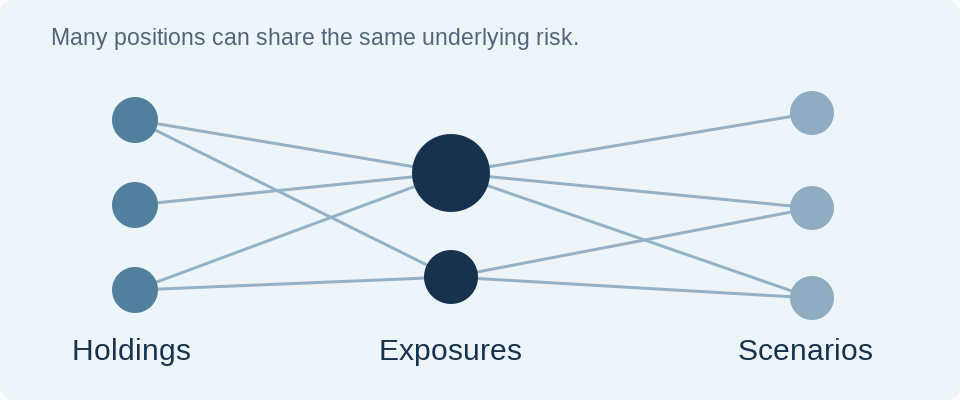
The SEC’s diversification guidance explains why spreading holdings within an industry leaves a different exposure from spreading them across sectors. A basket of mining shares can broaden the set of companies owned while preserving dependence on mining conditions. For portfolio assessment, the number of positions therefore cannot settle whether the intended exposure has been achieved. The common economic activity remains relevant. (SEC)
Editorial assessment. Mining exposure deserves greater weight when the objective includes owning the producing business and accepting its execution risks. A view confined to bullion gives less reason to add those demands. That judgment concerns the exposure sought; it establishes no future performance ranking.
Evidence scope. This analysis compares mechanisms rather than ranking securities. It supplies no valuation, projection of future gains, sensitivity multiplier or proposed allocation percentage. No ranking by realised gains is presented. Production recovery, future spending and the amounts an owner could receive are not forecast here.
Related research on commodity fund benchmarks